
Module 1: Learning About Special Education
Prior to starting this course, I thought I understood Special Education as I was working with many students with special needs every day in my classroom. I had taken part in many IEP meetings and had spent a lot of time talking with my support teacher. I often heard terms from the support rooms (like 1701) thrown around, but never thought much of it. I assumed that just as I had my job, they had their job and that those small details didn't affect me. I figured that I was responsible for what happened in my classroom and for how/what students were learning, but I didn't fully understand the bigger picture. I knew the designations and which category they signified, but I did not fully understand what they meant. I also understood there was a difference between modifications and adaptations.

What Did I Begin to Understand?

Special Education Laws
The Salamanca Statement explained that schools should ensure they accommodate ALL children regardless of their individual differences or needs (United Nations Educational, Scientific, and Cultural Organization, 1994). This is supported by the Canadian Charter of Rights and Freedoms which states that every individual is equal under the law and has the right to equal benefit without discrimination.
B.C.'s Special Education Policy states that "all students should have equitable access to learning, opportunities for achievement,
and the pursuit of excellence in all aspects of their educational programs" (Ministry of Education, 2016, pg 1). All of these documents ensure that ALL students will have equal access to an education.

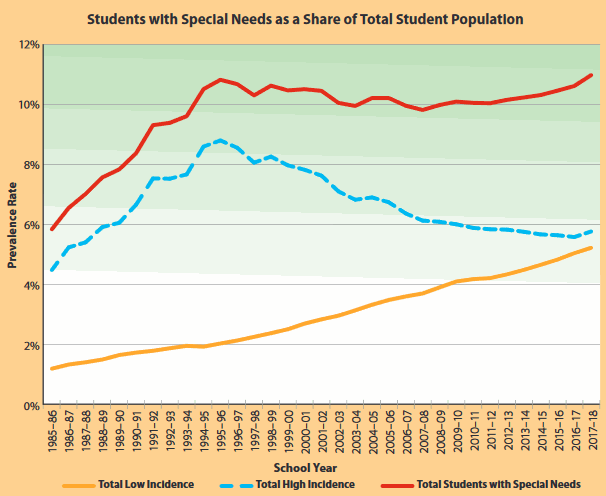
High Incidence vs Low Incidence
Where Does Funding Come From?
There is a significant gap in the funding that is provided by the Ministry of Education and what is actually needed by the school districts to support their students.
Rozworski (2018) identified that the funding from the Ministry of Education only covered about 58% of what the districts need to support special education. This means that the districts have to find ways to provide funding for the rest of the students, but obviously this leave large gaps between what is still needed and what the districts can find funding to cover.
This gap comes from the decision for the Ministry to provide additional funding for low incidence designations, but basic per-student funding for high incidence designations.
What's Next?

How will I implement what I learned?
Now that I have a better understanding of the differences between high and low incidence categories and where funding comes from. I will be better able to prepare for the supports that are possible (and aren't possible) when it comes to meeting the needs all of my students.
Understanding the laws also allows me to advocate for the rights of my students if I feel like they are not being provided with equal educational opportunities.
I will ensure that I consistently use first person language when discussing students with special needs as I now understand the importance of recognizing the student first and their needs second.

What do I still want to learn?
How do we ensure that we begin to close the funding gap and provide what we need for ALL students?